Showing posts with label Diego Rivera. Show all posts

Wednesday, July 24, 2024

ANAHUACALI MUSEO in Mexico City is definately worth a visit!


I recently returned from leading a tour to Puebla and Mexico City and we had the best time.  New to my tour this time was a visit to ANAHUACALI  MUSEO!  Wow!  So spectacular and we were almost the only people there!

Diego Rivera, the famous Mexican muralist, was also an obsessive collector of pre-Hispanic artifacts during his life, and by the time of his death he had amassed over 50,000 ancient objects. Rivera often sought artistic inspiration for his murals from these pieces, and indeed his greatest artwork often portrays scenes from pre-Hispanic history that reveal the reverence and curiosity he felt toward the past. 

For decades, Rivera and his wife, Frida Kahlo, had planned to build a museum where the Mexican public could visit and contemplate their collection.  Rivera saw some sketches by architect Juan O’Gorman and after consulting with the famous American architect Frank Lloyd Wright,  he designed this building himself.  The Anahuacalli construction began in 1942.  Unfortunately, due to other commitments and ill health, Rivera’s dream never came to full fruition during his lifetime. When he died in 1957, his daughter Ruth collaborated with Juan O’Gorman and Dolores Olmedo (along with her generous sponsorship) in order to fulfill the artist’s wishes and complete the project by 1963.

The museum building itself was designed according to Mesoamerican principles of architecture and is meant to symbolize a pyramid with a total of twenty-three rooms distributed over three levels.

Several elements of the exterior are built in the Teotihuacan style, 


while aspects of the interior were inspired by Maya temples and in reference to the Aztec pyramids, using a black volcanic stone common to the valley of Mexico.
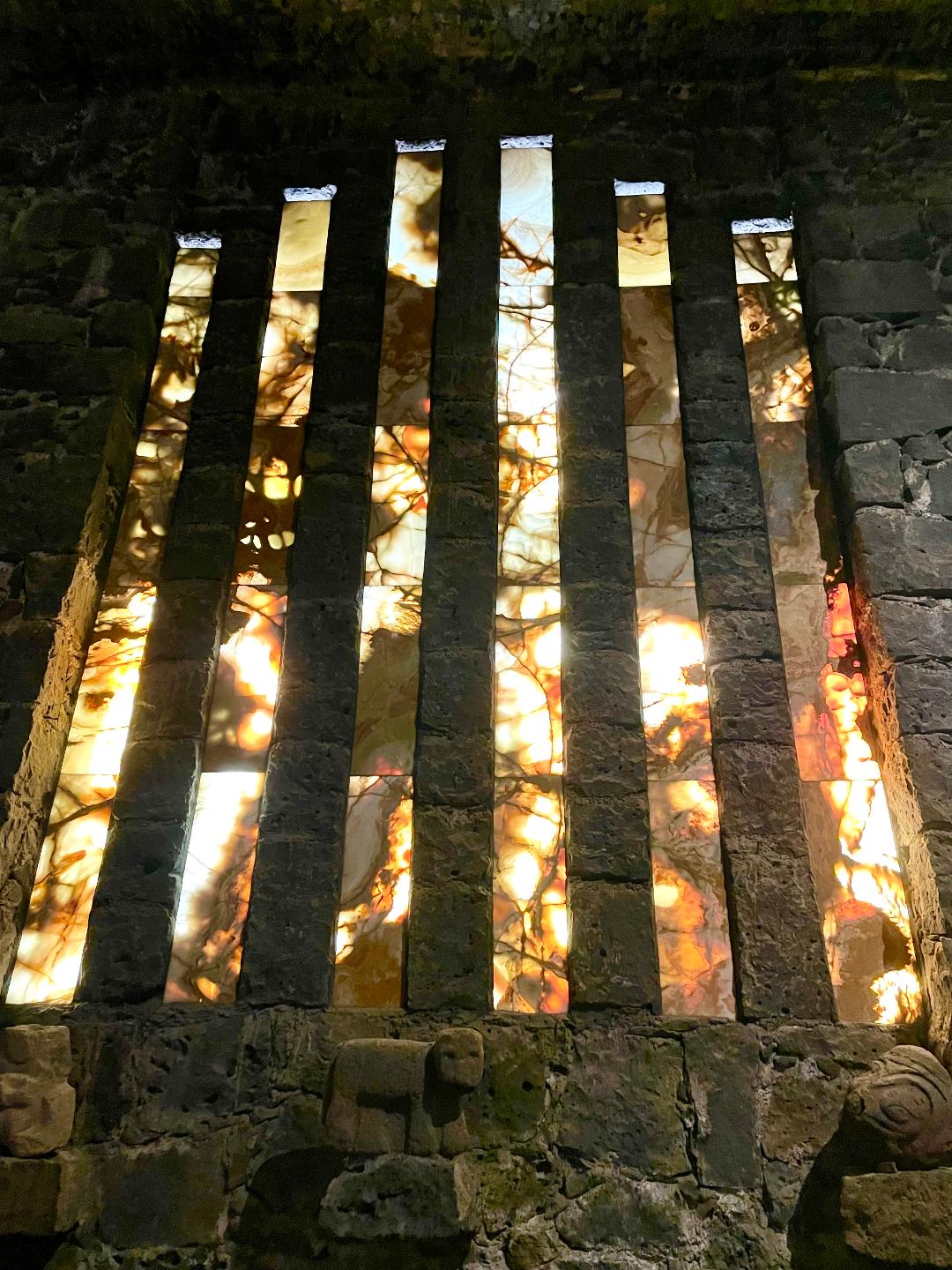
In  the windows, stones were placed in vertical cuts, a tecali stone in thin slabs were used for they were translucent and also complemented the stone.

You will also see many mosaics on the ceilings and walls, based on Rivera’s original designs, that depict the gods and goddesses of the pre-Hispanic cosmos.

A cast mosaic technique was implemented.  Place some cardboard with the drawn sketches directly on a wooden frame.  On these boards, a glue was applied, then the pieces of stone were adhered and finished the mortar.  When dry, the form work and the cardboard were removed.


Though the museum is too-often overlooked, its galleries showcase hundreds of interesting artifacts from all of Mesoamerica’s great civilizations, including the Zapotecs, Mayas, Aztecs, Olmecs, and Toltecs.

The galleries and spaces on the main floor were dimly lit (even thou my camera on my phone took brighter exposures) which made one really feel like you were in the depth of a pyramid.


 In the large central space located on the second floor of the Anahuacalli, called the "Study", 16 sketches for different murals made by Rivera in the early thirties are exhibited.

 
Among the sketches stands out the one made for the mural, Man at the Crossroads.  Diego was commissioned to paint a large mural in the lobby of the Rockefeller Center in New York City.  Thru his painting, he expressed views on the evils of capitalism and the positive aspects of socialism.  As work progressed,  he added a portrait of Lenin and other communist ideologies, figures not presented in his preparatory drawings.  When he refused to change the mural, he was paid off and released from his obligation.  In 1934, it was completely destroyed but in that same year, he received a commission to paint the exact mural at the Museo del Palacio de Bellas Atres in Mexico City. 

While the designs of the ground floor ceiling mosaics are monochromatic, the mosaics on the upper sections were made with stones of different colors.
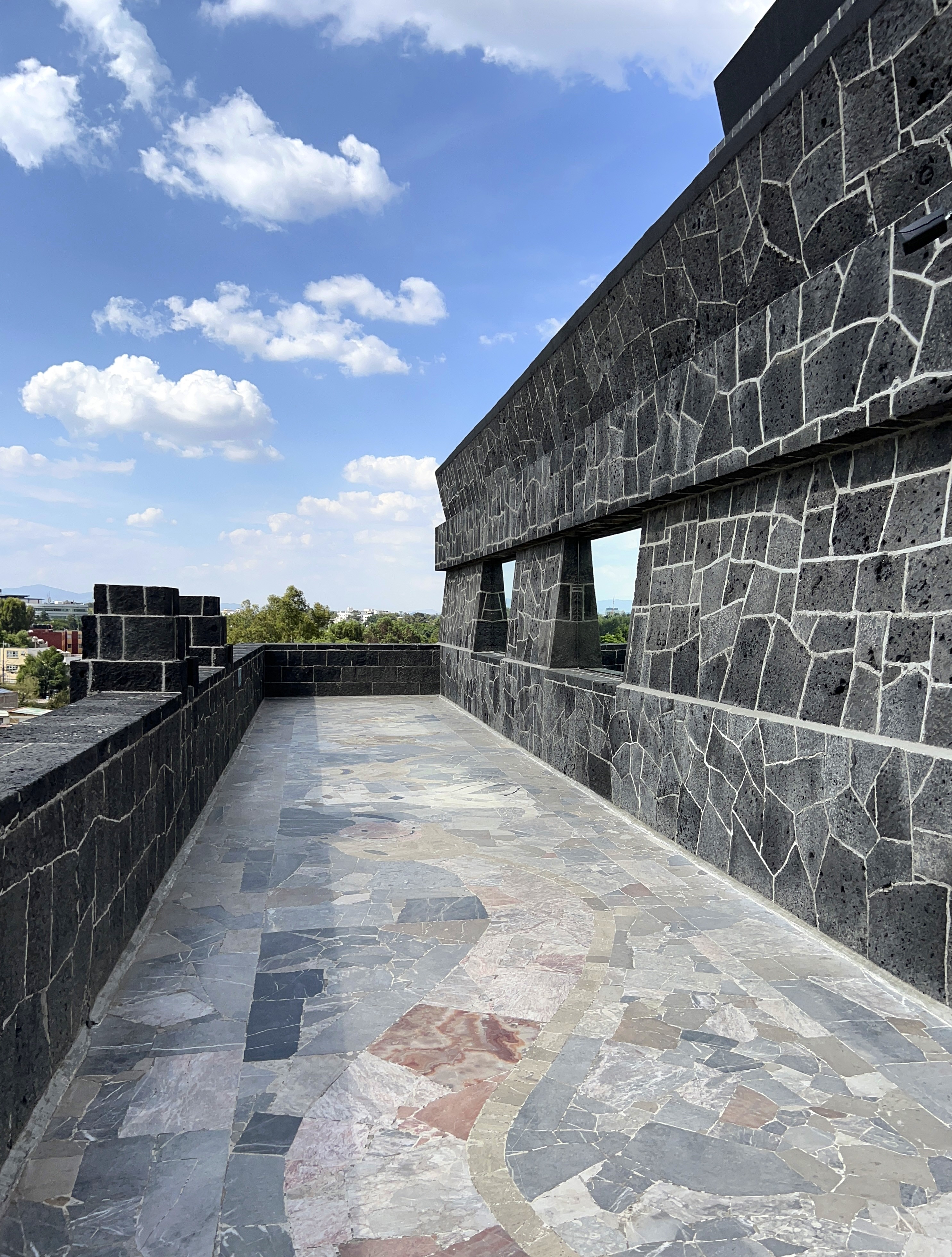
The upper terrace has a breathtaking view.  Not to mention the exquisite stonework.

The total area of land is almost 15 acres, in which Rivera dreamt of a "City of Arts", a space for artistic creation where architecture, painting, dance, music, sculpture, theater, crafts and ecology co-exist.  In the center of the complex is a large central plaza, where various artistic and social events occur.

Located to one side of the main building is the Diego Rivera gallery, a space for high-quality temporary exhibitions.  Another striking building is the Sapo-Rana Art Library, which houses various art books and the collection of 2,400 copies from the personal library of the anthropologist Eulalia Guzman, who donated them to the museum in the 1950's.
Separate buildings laid out in this complex are connected by walkways.  I could totally envision building something like this for individual housing. 


The spaces were just so intimate, inviting and at the same time instilled a sense of spaciousness.  Such creative design!

In memory of Rivera, the following quote was chosen for the inscription engraved on the museum foundation stone: "I return to the people what I was able to rescue from the artistic heritage of their ancestors".

ANAHUACALLI ~ MUSEO DIEGO RIVERA

Calle Museo 150, San Pablo Tepetlapa
  Coyoacán, Ciudad de México

Monday through Sunday

11 am - 6 pm


Wednesday, December 30, 2020

The Photography at the Mexican Modernism Exhibition at the Denver Art Museum

The photography at the Mexican Modernism Exhibition at the Denver Art Museum is spectacular.  My personal favorite is the portrait below of Frida Kahlo taken by Edward Weston.  Note, by clicking on any of the images, you will be able to view it full screen.

Frida Kahlo - Edward Weston - 1930

Weston and his Hollywood actress and political activist, Tina Modotti, lived in Mexico City from 1923 to 1927 where they opened a portrait studio. This is where they met Diego Rivera.  It was when Weston was living in Carmel, he headed north to San Francisco to see Diego and meet his new wife.  He was intrigued and mesmerized by Frida.  Above Frida is wearing an indigenous dress, a European silk shawl, three strands of Aztec jade beads and intricate dangling earrings

Weston's style shifted to a more direct, sharply focused and structured photographic style known as “straight” photography, which was championed by Alfred Stieglitz.  He was well known for shooting images of nature, close-ups of vegetables and people’s faces.

Large Ladder - Manuel Alvarez Bravo - 1932

Bravo was born in Mexico City in 1902.   He was a photographer most famous for his poetic images of Mexican people and places.  

He was heavily involved with the surge of  artistic renaissance that occurred after  the Mexican Revolution.  He was also influenced by international influences, notably Surrealism, thou his art was truly centered around the Mexican culture.

Mattress - Manuel Alvarez Bravo - 1927

Born into an artistic family, it was after meeting German photographer Hugo Brehme in 1923, that he purchased his first camera.   He was largely self-taught.  Thru his friendship with Tina Modotti, he met Edward Weston and many of the leading artists of the Mexican Renaissance; Diego Rivera, Frida Kahlo, Rufino Tamayo, David Alfaro Siquueiros and Jose Clement Orozco.

He took over Modotti’s job as photographer for the magazine Mexican Folkways after her deportation. He had his first one-man show in 1932.   He also worked at a cameraman on Sergey Eisenstein's film Que Viva Mexico that was never completed.

 Organ Pipe Cacti - Manuel Alvarez Bravo - 1929 - 1930

It was his still photography that gained him fame.  Influenced by Weston, his close up photographs took on an artistic abstract nature.  Later on he was more interested in the urban landscape of Mexico City , a documentary of Mexican life, the villages and its people.

Box of Visions - Manuel Alvarez Bravo - 1929

Person standing behind a fabricated box, holding a dark cloth over his head.

Obstacles - Manuel Alvarez Bravo - 1929

 Burial at Yalalag, Oaxaca - Lola Alvarez Bravo - 1948

One of Lola's  most iconic images was Burial at Yalag.  A somber scene, a funeral procession of Zapotec women in their traditional dress accompanying a coffin.   The contrast of the white flowing dresses and the dark landscape is very moving.  It's also a statement of the women's lack of individual identify as they are not amongst the men in the procession.
She once said, “If my photos have any value, it's because they show a Mexico that no longer exists.” 
One of Frida's life long friends, Lola Alvarez Bravo, was the first Mexican female photographer.  It was when she married Manuel Alvarez Bravo, that she learned her trade.  They were married for about nine years.   She did not come into her own until her separation in 1934.  She too was inspired by Weston and Modotti. 
 
Shark Hunters - Acapulco - Lola Alvarez Bravo - 1950
Photographing life that she found before her. 
 
 La Cruda - The Hangover - Lola Alvarez Bravo - 1945
 
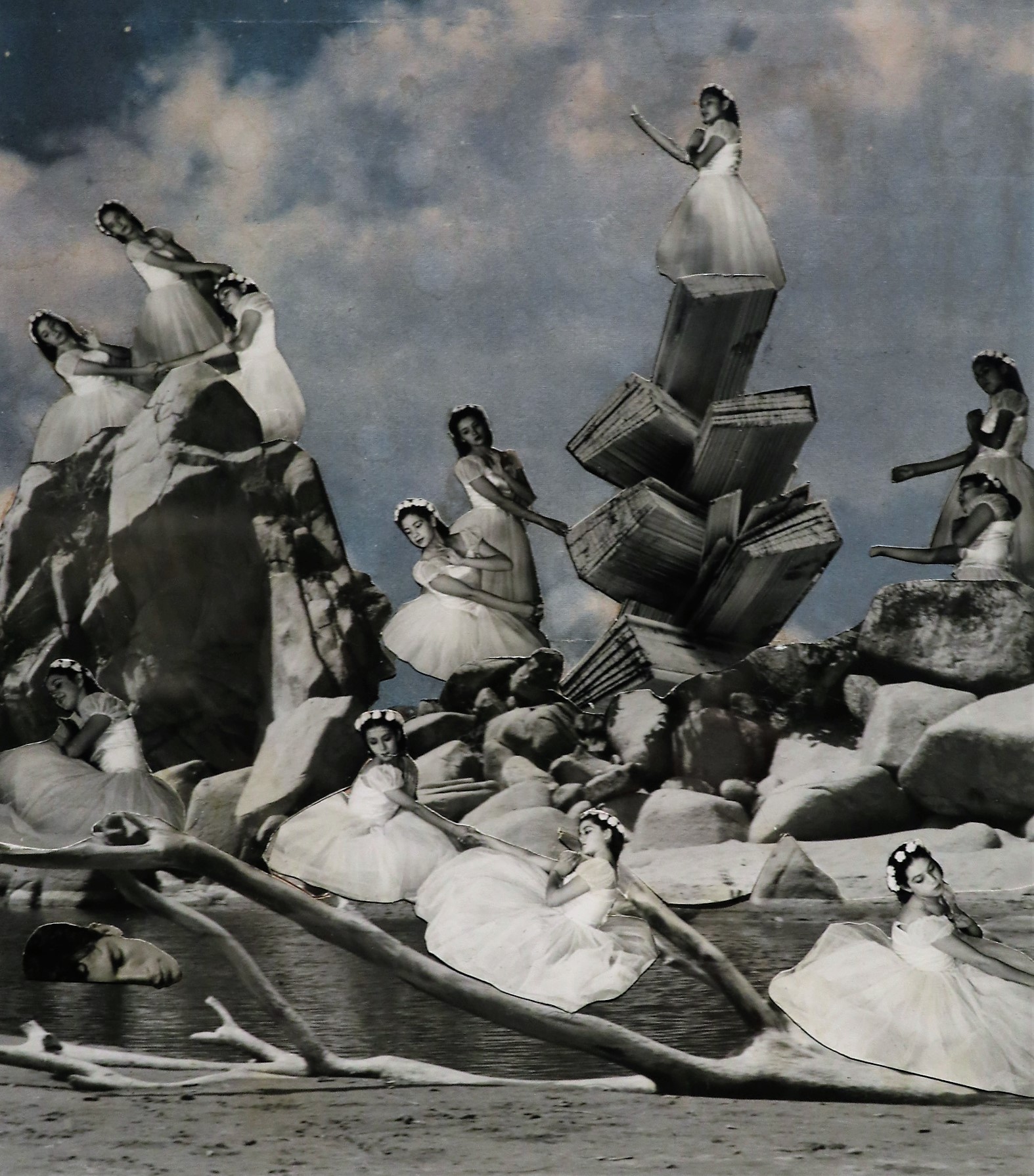
The Dream of the Drowned - Photomontage - Lola Alvarez Bravo - 1945
 
Photomontage is the process and the result of making a composite photograph by cutting, gluing, rearranging and overlapping two or more photographs into a new image.  Sometimes the finished "collage" is photographed so that the final image may appear as a seamless physical print.   Lola combines parts of her photography, the face of the Painter Juan Soriano floating in the water along with the dancers of the Ballet de Folkorico de Mexico City.  This real and fantasized world is a quality shared by the surrealism movement.
Ruth Rivera Marin - Veracruz - Lola Alvarez Bravo - 1950

Ruth Rivera Marín was born in Mexico City on 18 June 1927 to parents Diego Rivera and his first wife, Guadalupe Marin Preciado,  a well-known actress and writer. 
Ruth was the first woman student of the College of Engineering and Architecture at the National Polytechnic Institute and her career centered on teaching the theory and practice related to architecture.                                                                                                                                      
Mexican Landscape II - Photomontage - Lola Alvarez Bravo - 1950

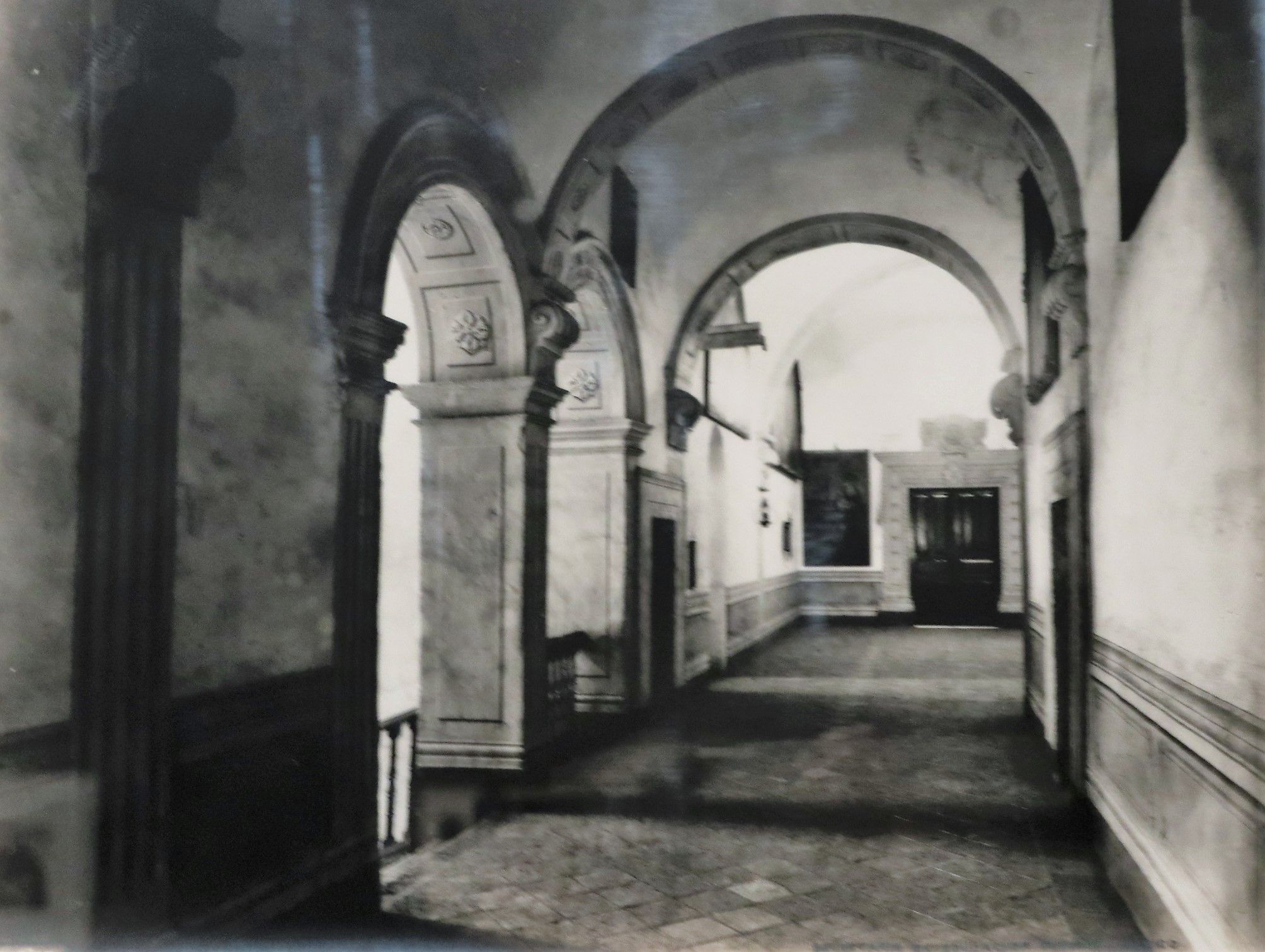
Tepotzotlan - Hall of Convent - Guillermo Kahlo - 1920's

Wilhelm (Guillermo) Kahlo (Frida's father) was born in Germany in 1871 and later moved to Mexico City in 1891 where he had his own photography studio, specializing in buildings, room interiors, factories and machinery.  Upon his arrival he changed his name from Wilhelm to Guillermo.  Following some commercial success, he was commissioned under the regime of Porfirio Díaz, President of Mexico in the early 1900s, to document the country's colonial architecture, government buildings, infrastructure, landmarks, monuments, streets and churches.

 Mexico City's Cathedral - Choir Stalls - Guillermo Kahlo - 1920's

Photography played a huge role in documenting the political events during the Mexican Revolution (1910 – 20).

  
Bell Tower - Guillermo Kahlo - 1920's

In the 1920's Guillermo's church photographs were republished in six volumes titled Iglesias de Mexico / Churches of Mexico.   His photography was no longer seen simply as monuments to European religious tradition, the churches he captured were reinterpreted for their vernacular qualities and the role of the indigenous workers who built them. 

Frida Kahlo Wearing a Plaster Cast - Florence Arquin - 1950
 
Painter, photographer, educator, writer, and critic, Florence Arquin (1900-1974) was active in Chicago, Illinois.   She was widely known for her expertise in the field of Latin American Studies and had a close relationship with Frida Kahlo and Diego Rivera.

 
Seated Frida in Her Hospital Room with Photographs - Lola Alvarez Bravo - 1940's
 
 
 Frida Kahlo in a Wheelchair with a Sun Umbrella - Florence Arquin - 1950's
 
Frida Biting Her Necklace - Lucienne Bloch - 1933
 
Bloch was born in 1909 in Geneva, Switzerland.  She was the youngest child of composer and photographer Ernest Bloch.  In 1917, her family immigrated to America.  She was a prolific artist.  At 15 years old, she attended The Cleveland Institute of Art and later in life enrolled in the Ecole National et Superier des Beaux Arts in Paris.  
In 1929, she pioneered the design of glass sculpture for the Royal Leerdam Crystal Glass Factory in the Netherlands and that caught the eye of Frank Lloyd Wright.  He invited her to teach at Taliesin East where she worked beside fellow artists.
In 1931, she met and began her apprenticeship with Diego Rivera on his frescoes in New York and Detroit.   She formed a close friendship with Frida and they became each others companion and confidant.  She accompanied Frida to Mexico when Frida's mother became ill and was with her in Detroit when Frida suffered a miscarriage.  
An established photographer, she took the only existing photographs of the Rivera's mural, Man at the Crossroads in Rockefeller Center in New York City before it was destroyed.  She also contributed many photographs of Frida and Diego to biographical works about them.
Bloch married one of Rivera’s chief plasterers, Stephen Pope Dimitroff and together they created Fresco murals all over the United States.  Bloch was a Fresco muralist for the Federal Arts Project of the Works Progress Administration from 1934-1939. 
 
 
Frida Kahlo Leaving the Church in Coyoacon - Fritz Henle - 1937

Fritz Henle (June 9, 1909 – January 31, 1993) was a German-born photographer, known as "Mr. Rollei" for his use of the 2.25" square format film used in the Rolleiflex camera.  It was Frida who invited Henle to her home, Casa Azul in Coyoacon, several times to photograph her.
He photographed fashion, portrait, travel and industrial subjects and his work was published by Life,  Mademoiselle, Town & Country and Harper's Bazaar magazines. 

Frida Kahlo - Imogeen Cunningham - 1931

Imogeen Cunningham was born in 1883.  She was an American photographer who was best known for her portraits and her images of plant life.

In 1930, Frida and Diego moved to San Francisco where Diego was working on two separate murals.   That is where Kahlo met Cunningham.  Cunningham captured the essence of Frida with her calm, pensive gaze into the camera dressed with the traditional Mexican shawl (reboza), her jewelry and hairstyle.

Kahlo, known for her self-portraiture, was acutely aware of how she wanted to be portrayed photographically. She once said, “I knew a battlefield of suffering was in my eyes. From then on I started looking directly at the lens, unflinching, unsmiling, determined to show I was a good fighter to the end.”

Also,  she “ … effectively manipulated her self-image before the lens through her gaze, pose, and the carefully constructed symbolism of her clothing, jewelry, and hairstyles.”


DENVER ART MUSEUM

 Exhibition runs thru January 24, 2021